When planning for trade shows, businesses face the challenge of effectively choosing LED displays. "Understanding the audience is crucial when selecting LED displays for trade shows," says Dr. Mark Stevens, a leading expert in exhibition technology. His insight highlights the need for a tailored approach to display selection.
Selecting the right LED display can impact the overall success of your exhibit. Factors like size, brightness, and resolution must be considered. Moreover, showing engaging content is essential. Many exhibitors overlook the importance of these details, leading to less effective displays.
How to choose LED displays for trade shows involves assessing both your brand's needs and the environment at the venue. An inadequate display can dilute your brand's message, making it vital to invest time in this decision. Failing to do so may result in a missed opportunity to captivate potential clients. Ultimately, a well-chosen LED display can enhance visibility and draw attendees to your booth.
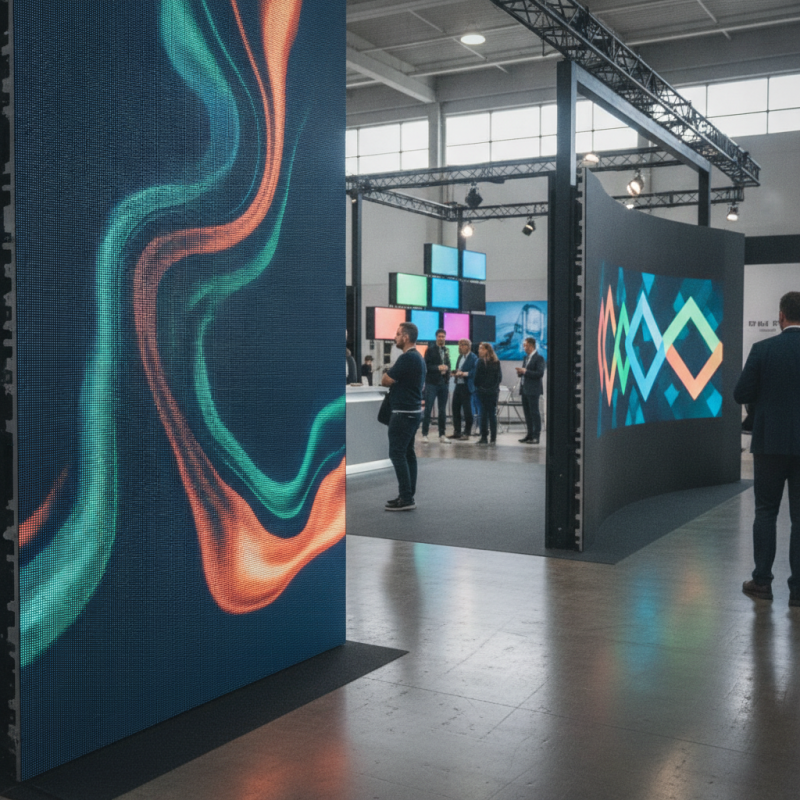
Understanding the Importance of LED Displays in Trade Shows
LED displays have become a vital component in trade shows.
These displays capture attention and enhance brand visibility. Their vibrant colors and dynamic content make them stand out among traditional signage.
This difference can significantly impact foot traffic to your booth. Trade shows are competitive, and first impressions are crucial.
Investing in the right LED display can showcase your products exceptionally well.
Consider screen size, resolution, and brightness. The display should be visible even in daylight.
Additionally, think about the positioning. An effective display draws people in while providing clear messaging.
However, not all displays deliver the same results. It's essential to ensure the technology meets the venue's needs.
Planning how you use the LED display is equally important. Content is king; make it engaging and relevant.
Remember that simple visuals often work better. Aim for clarity over complexity.
Regular adjustments based on feedback are key to improvement.
Organizing and refining your approach requires ongoing effort.
Learning from each trade show experience can refine your display strategy.
Factors to Consider When Choosing the Right LED Display Size
When choosing the right LED display size for trade shows, several critical factors come into play. The first is the viewing distance. If your booth is in a large space, a larger display may be needed. People need to see your content clearly from afar. Conversely, if your exhibit is compact, a smaller screen can also work well.
Additionally, consider the content you'll showcase. If your visuals are detailed or text-heavy, a bigger display can enhance readability. Also, aspect ratios matter. A wide display can be more engaging for video content. Optimize the size to match the media type you plan to use.
Here are a few tips to help in your decision. Assess the venue and its layout. Test different sizes at actual trade shows if possible. Always think about your audience's experience. For instance, can they interact with the display? Is the message delivered effectively? These questions gauge the effectiveness of your display size. A well-sized LED can significantly impact viewer engagement and help convey your brand message clearly.
Evaluating Resolution and Image Quality for Effective Messaging
When selecting LED displays for trade shows, resolution and image quality are paramount. Clear and vibrant visuals catch attention. Poor image quality can overshadow your messaging. The effective display should reflect your brand's intent, capturing the audience's interest. High-resolution displays enhance detail, making your content more engaging.
For optimal results, consider the pixel pitch. A smaller pixel pitch provides better image quality, especially for close viewing. This is crucial in trade show environments, where attendees often gather closely around displays. It's vital to evaluate your audience's distance from the screen.
Lighting also plays a significant role in image clarity. An LED display must perform well under strong ambient lighting. Test the display in various conditions to ensure it meets your needs. Color accuracy and contrast ratios need attention too. These elements contribute to the overall effectiveness of your message. Invest time in quality checks. Remember, your display is a reflection of your brand’s professionalism and commitment.
Top 10 Tips for Choosing LED Displays for Trade Shows
| Tip Number |
Tip |
Description |
Importance Level (1-5) |
| 1 |
Evaluate Resolution |
Choose a display with high resolution for sharp images. |
5 |
| 2 |
Consider Size |
Select an appropriate size based on booth space and audience distance. |
4 |
| 3 |
Check Brightness |
Ensure the display is bright enough for large crowds and daylight. |
5 |
| 4 |
Look for Color Accuracy |
High color accuracy enhances the overall visual experience. |
4 |
| 5 |
Assess Viewing Angle |
Wide viewing angles attract more attendees from different positions. |
3 |
| 6 |
Check Hardiness |
Choose a durable, weather-resistant model especially for outdoor use. |
5 |
| 7 |
Evaluate Refresh Rate |
High refresh rates reduce flickering during live events. |
4 |
| 8 |
Consider Format |
Select a format that suits different content types effectively. |
3 |
| 9 |
Plan for Connectivity |
Ensure compatibility with other display technologies and inputs. |
4 |
| 10 |
Compare Vendors |
Research multiple vendors for the best quality and prices. |
5 |
Assessing Brightness and Visibility in Various Lighting Conditions
When choosing LED displays for trade shows, assessing brightness and visibility is crucial. Research indicates that about
70% of attendees remember what they saw in bright, engaging displays. In bright environments, such as convention centers or outdoor events, the effectiveness of LED displays can drastically change. Experts recommend a minimum brightness of
5,000 nits for clear visibility in such settings.
Furthermore, color contrast plays a key role. Displays with higher contrast ratios improve readability and attract attention. Studies suggest that displays with a contrast ratio above
4,000:1 are more effective in various lighting. This is especially important when presentations or live videos are involved. A display that lacks proper brightness and contrast can lead to reduced viewer engagement.
Reflection should also be a consideration. Displays, even with high brightness, can falter in direct sunlight. This challenge necessitates rigorous testing under various lighting conditions. Many professionals overlook this step, which could lead to subpar display performance. Having a plan to mitigate these issues, like choosing the right location and angle, is essential for maximizing impact.
Determining Budget and Cost-Effectiveness of LED Display Options
When planning for trade shows, determining the budget for LED displays is crucial. Research indicates that LED technology costs have significantly decreased over the past decade, making them more accessible. For instance, a report by Grand View Research shows the global LED display market could reach $26 billion by 2025. Balancing quality and cost-effectiveness is key. Consider your audience and the impact you want to make.
Evaluate different LED displays within your budget. Look for options that offer the best return on investment. High-resolution displays may initially cost more but can grab attention effectively. A study from MarketsandMarkets highlights that businesses can increase engagement by up to 50% with quality visuals.
Explore options that fit your specific requirements. For example, consider screen size, pixel pitch, and brightness. Smaller pixels can enhance clarity, while choosing the right size ensures visibility from a distance. Remember, spending too little can lead to disappointing results. Balance is necessary. Prioritize displays that align with your strategic goals.
FAQS
: LED displays attract attention and enhance brand visibility. Their vibrant colors stand out among traditional signage.
Consider screen size, resolution, and brightness. Ensure visibility even in daylight for maximum impact.
Keep visuals simple and engaging. Aim for clarity and relevance to keep viewers interested.
A balanced approach is key. Factor in quality versus cost-effectiveness to make the best investment.
High-resolution displays can increase engagement by up to 50%. They effectively capture attention.
Regular adjustments based on feedback are essential. This helps refine your strategy and improve results.
Spending too little can lead to disappointing results. Ensure your investment aligns with your goals.
Screen size, pixel pitch, and brightness all affect visibility. Choosing the right size is vital.
Learning from each experience helps refine your approach. Continuous effort is necessary for improvement.
Yes, as costs have decreased, LED technology has become more accessible and can offer better returns.
Conclusion
When considering how to choose LED displays for trade shows, it is crucial to understand their importance in attracting attendees and effectively conveying messages. The right LED display can enhance visibility and engage visitors, making it a vital component of any trade show strategy. Key factors to consider include the display size, which should be appropriate for the venue and audience, and the resolution, which affects image quality and clarity.
Additionally, brightness and visibility are essential, especially in different lighting conditions, to ensure messages are readable from various distances. Lastly, determining a budget and evaluating the cost-effectiveness of different LED display options can help organizations make informed decisions that align with their marketing goals. By paying attention to these factors, businesses can maximize their impact at trade shows.

 LYRA LED